
national health systems strengthening evaluation
-
We support organizations by asking the hard questions, creating meaning and ensuring social impact teams understand how to make their data useful while prioritizing collaboration, clarity, and accountability to the communities they serve. Our work combines monitoring, evaluation, research, and learning with facilitation and systems thinking to help teams understand what is working, where implementation challenges emerge, and how programs can adapt. Across sectors and geographies, we focus on developing clear and digestible recommendations that strengthen decision-making and long-term impact.
-
Our approach blends rigorous evaluation methods with collaborative learning processes. We design research and facilitation strategies that transfer internal knowledge into a competitive advantage, working across stakeholders at all levels, including policymakers and leadership to implementers and communities. This ensures that findings are not only technically sound, but also relevant and utilization-focused for effective decision-making.
-
We partner with community-based organizations, public entities, international organizations, nonprofits, and cross-sector initiatives addressing complex systems challenges. Engagements have included work with government ministries, state agencies, multilateral programs, and local partners across climate, health, energy, governance, economic empowerment, market systems development, equity analysis, and social services.
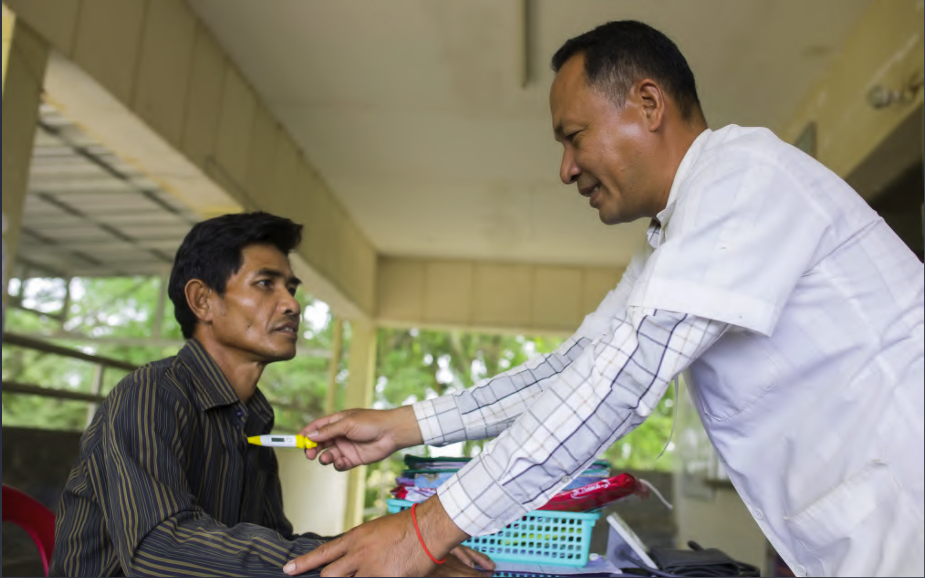
Photo credit: EQHA/FHI 360engagement snapshot
This case study highlights my support of a multi-program evaluation examining how national health system reforms translated into implementation across facilities, with a focus on qualitative insight, data quality, and equity-informed analysis.
Commissioned by: US Agency for International Development
Implementer: FHI 360
System Actors: National policymakers, provincial health departments, facility managers, providers
Geographic Scope: Cambodia
Sector: Global Health | Health Systems Strengthening
Engagement Type: Performance & Process Evaluation
Methods: Qualitative data collection, tool design, enumerator training, stakeholder interviews, equity-focused analysis
engagement overview
Client ContextCambodia has undertaken significant reforms to improve the quality and safety of health services, strengthen regulatory oversight, and expand access to care. These reforms included initiatives focused on facility accreditation, improvements to medical education, and expanded quality standards for service delivery. As part of these efforts, a multi-year initiative supported by the U.S. Agency for International Development worked with the Royal Government of Cambodia to strengthen policies, standards, and service delivery systems across both public and private health facilities.
To understand how these reforms were functioning in practice, program leadership commissioned a performance and process evaluation examining implementation across multiple initiatives. This national evaluation would also examine how these reforms were implemented at various levels of the health system and assess implementation progress across public and private facilities.
The ChallengeThe evaluation examined the implementation of two related health initiatives operating within Cambodia’s broader health reform landscape. This required assessing program performance while also understanding how policies and standards translated into operational realities across facilities and stakeholder groups. The evaluation sought to understand:
how quality standards were being implemented across health facilities
how health workers and administrators interpreted new policy requirements
what operational challenges were affecting implementation at the facility level
how different components of the reform agenda were interacting across the system
The goal was not only to document program activities but also to assess how policies were being operationalized in real-world service environments. The evaluation team needed to provide actionable recommendation that reflected both program implementation and broader system dynamics, including variations in access, institutional capacity, and alignment between national policy goals and frontline service delivery.
Role & ContributionsThe evaluation relied primarily on qualitative research methods to capture the perspectives of stakeholders across the health system. As an evaluation specialist, I supported the qualitative research and data quality components of the evaluation. My work focused on strengthening methodological alignment, ensuring data quality, and integrating equity considerations throughout the evaluation process. Because the evaluation examined two overlapping programs, tool alignment was particularly paramount to ensure data collected could support comparative and coherent analysis.
Methods included:
Key informant interviews with health administrators, clinicians, and policy stakeholders
Facility-level interviews with staff responsible for implementing accreditation and quality initiatives
Document review of national policy frameworks and implementation guidance
Comparative analysis of implementation experiences across facility types
This approach allowed the evaluation to examine both policy design and operational realities within healthcare settings.
gender and social inclusion analysis
Throughout the evaluation, I integrated gender and social inclusion considerations, reviewing mixed methods findings to ensure that analysis captured differences in access, participation, and service delivery experiences across populations. This critical lens identified areas of strength, improvement, and case studies related to equity and implementation variability across the health system.
ResultsThe evaluation produced insights that informed program leadership and stakeholders about how quality reforms and service delivery initiatives were functioning across the health system.
Findings helped stakeholders:
Identify implementation challenges affecting adoption of new standards
Understand differences between policy design and frontline practice
Strengthen coordination between national and facility-level actors
Refine implementation priorities for ongoing program activities
Recommendations then led to improved alignment between policy objectives and operational realities across Cambodia’s evolving health system, in addition to additional programming and support for service delivery activities.
Strategic ImpactHealth system reforms often appear coherent at the policy level but become more complex when implemented across diverse facilities and administrative structures. By documenting how reforms were experienced by health professionals and administrators, the evaluation provided a clearer understanding of how national policies were functioning within day-to-day service delivery.
This engagement demonstrated the value of integrating qualitative rigor and equity-focused analysis within complex health systems evaluations. Through strengthened data quality, methodological alignment, and elevating recommendations from on-the-ground stakeholders, the evaluation contributed to a clearer understanding of how national reforms translated into practice.
The work also reinforced the importance of examining both program performance and broader system dynamics when assessing large-scale health initiatives.
Photo credit: EQHA/FHI 360
“Christine approached our client work with sincere professionalism and quickly gained the trust of everyone on our team in Cambodia. She has a knack for dissecting nuances necessary to understand complex gender and culture dynamics and excels at making everyone feel included in a way that is authentic and not forced. She brings a stellar combination of technical skills, ethics and evaluation savvy to her work that makes her a sound advisor on matters requiring GESI, systems thinking and organizational development expertise. She's an incredibly valuable thought leader and professional!”
— Leah Jones, MPH, Senior Evaluation AdvisorGet in Touch
Whether you have a question, an idea, or just want to say hello, feel free to reach out. We look forward to connecting and collaborating with you.