
learning + evaluation systems
-
We support organizations by asking the hard questions, creating meaning and ensuring social impact teams understand how to make their data useful while prioritizing collaboration, clarity, and accountability to the communities they serve. Our work combines monitoring, evaluation, research, and learning with facilitation and systems thinking to help teams understand what is working, where implementation challenges emerge, and how programs can adapt. Across sectors and geographies, we focus on developing clear and digestible recommendations that strengthen decision-making and long-term impact.
-
Our approach blends rigorous evaluation methods with collaborative learning processes. We design research and facilitation strategies that transfer internal knowledge into a competitive advantage, working across stakeholders at all levels, including policymakers and leadership to implementers and communities. This ensures that findings are not only technically sound, but also relevant and utilization-focused for effective decision-making.
-
We partner with community-based organizations, public entities, international organizations, nonprofits, and cross-sector initiatives addressing complex systems challenges. Engagements have included work with government ministries, state agencies, multilateral programs, and local partners across climate, health, energy, governance, economic empowerment, market systems development, equity analysis, and social services.
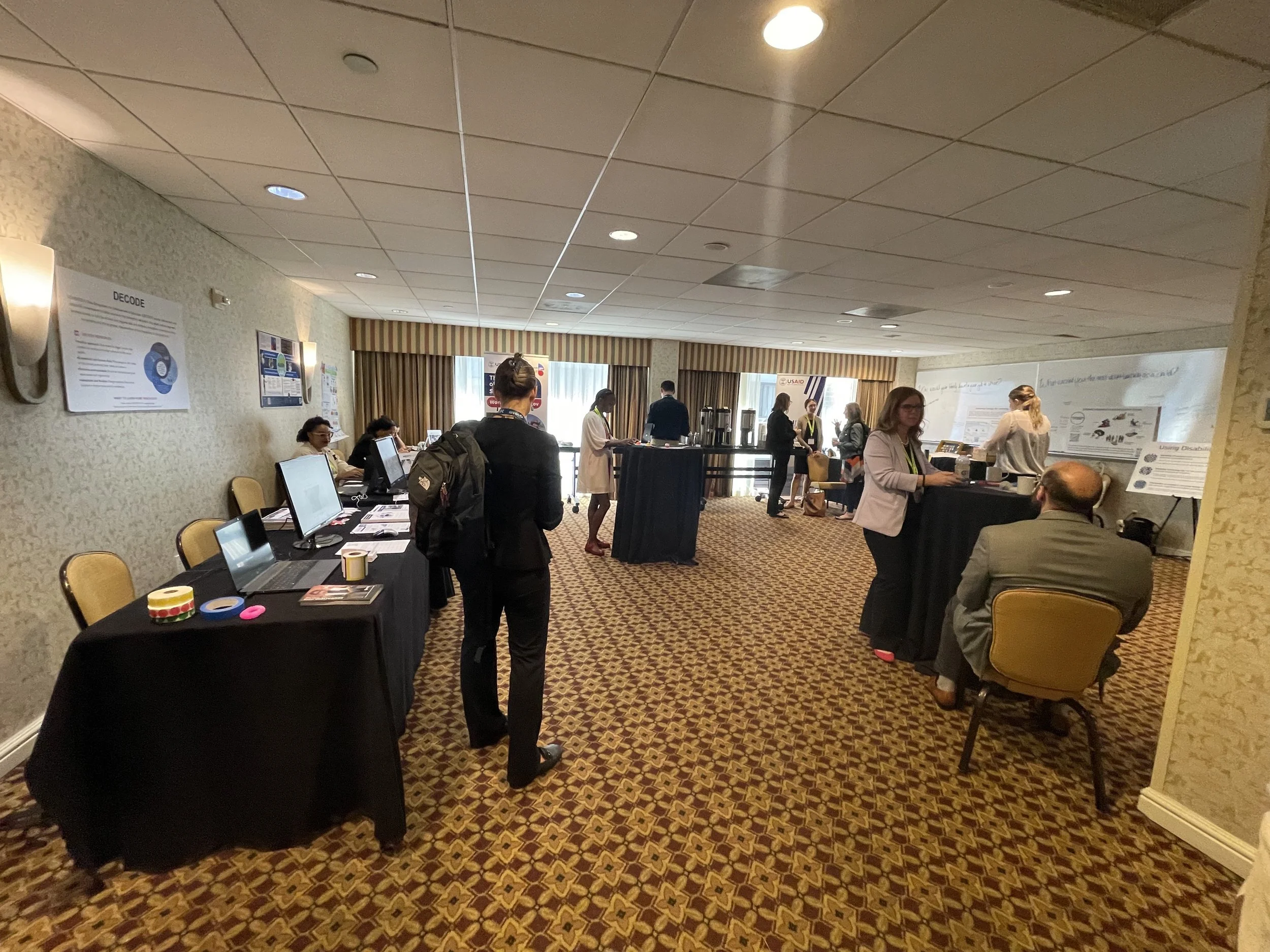
engagement snapshot
Led strategic learning and evaluation facilitation across interdisciplinary program teams, supporting the development of an evaluation team mission, work plan, and performance indicators while guiding organizational discussions on measurement, learning, and program reflection.
Program Size: ~65 participants across interdisciplinary teams
Format: Strategic facilitation, team retreats, and evaluation framework development
Focus: Organizational learning and evaluation system development
Context: Organizational development initiative
Outputs: Evaluation team mission and vision, work plan, performance indicators, learning discussions
engagement overview
Client ContextThe DEVELOP program brought together interdisciplinary teams working across a wide range of applied organizational development, professional development, knowledge management, and strategic communications activities. With teams operating across different thematic areas, program leadership sought stronger coordination around evaluation, measurement, and both organizational and program-wide learning.
Different teams approached measurement and reflection in various ways, making it difficult to understand how experiences across the program related to one another or how lessons could inform future work. The goal was to support teams in developing clearer evaluation frameworks and metrics while creating opportunities for collaborative reflection across the program.
Strengthening evaluation structures and creating opportunities for collective reflection became a growing priority.
The ChallengeAs the program expanded, staff were navigating complex questions about how to measure their work and how evaluation should function within the organization. At the same time, a newly established evaluation team within USAID’s Center for Education needed to define its role, priorities, and relationship to the broader program.
Large programs often produce significant experience and data, yet without shared structures for reflection and measurement, it can be difficult to compare lessons across teams or identify program-wide priorities.
The challenge was to support a growing program in developing more consistent approaches to evaluation while strengthening opportunities for learning across teams. Rather than imposing a fixed structure, leadership wanted a process that would allow staff to collectively shape how evaluation and learning should function across teams.
Role & ContributionsAs Senior Monitoring, Evaluation, and Learning Specialist, I worked across the program to facilitate discussions on evaluation, learning, and organizational priorities.
One key engagement involved working with the Center for Education’s newly formed evaluation team. The group needed to clarify its purpose and determine how its work would align with the broader organizational framework. Working as co-facilitator, I designed and led a series of structured discussions that helped the team define its direction. The process included:
developing a shared mission and vision for the evaluation team
outlining a preliminary work plan
identifying initial performance indicators aligned with the broader organizational framework
Because the team was newly formed, these discussions focused as much on building shared understanding as they did on producing technical outputs.
Across the broader program, I also co-facilitated team retreats and learning discussions that allowed staff to reflect on program progress, address internal challenges, and consider how evaluation could support their work more effectively.
ResultsThese engagements helped the evaluation team establish a clear starting point for their work and clarified how their efforts fit within the broader organizational structure. The process produced several practical outcomes, including:
a shared mission and vision for the evaluation team
a preliminary work plan and performance indicators
improved coordination around evaluation approaches across teams and the broader Center for Education
structured opportunities for staff to reflect on program experiences
Leadership noted that the facilitation process helped the new team quickly establish its role within the organization.
Strategic ImpactOrganizations often recognize the importance of evaluation but struggle to define how it should function in practice. Creating space for staff to collectively shape evaluation structures can strengthen both buy-in and clarity around roles.
In this case, facilitation helped the organization move from loosely defined expectations around evaluation toward a more coherent approach that staff could build upon over time.
Get in Touch
Whether you have a question, an idea, or just want to say hello, feel free to reach out. We look forward to getting in touch within one to two business days.